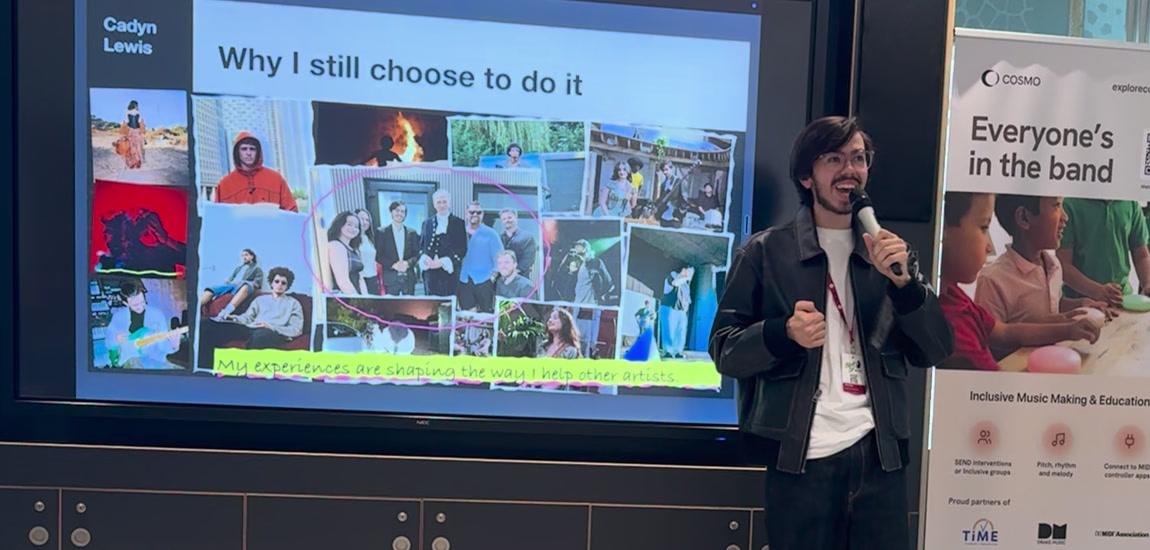
Cadyn Lewis discussing the experiences shaping his work with other artists.
Conference / Artist development
Origins Inconclusive at Music Mark 2026
Inside the work
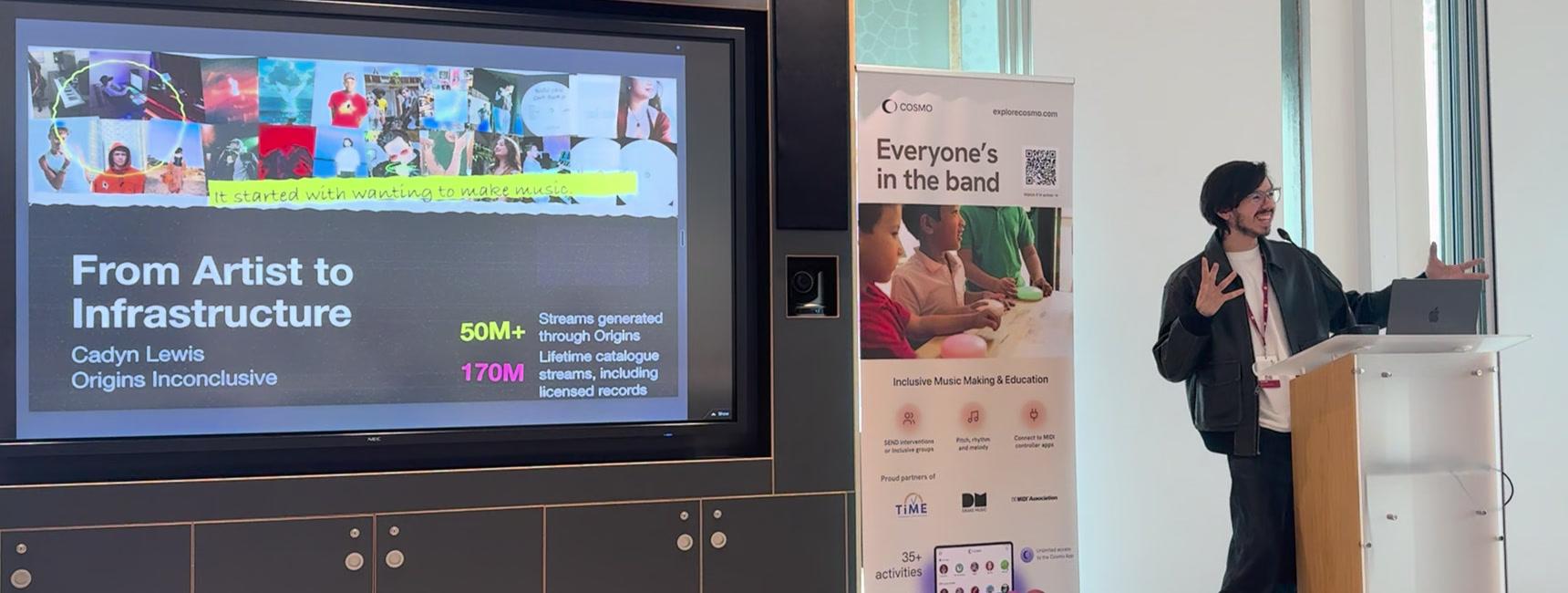
Origins Inconclusive founder Cadyn Lewis spoke at the Music Mark Conference in Liverpool on 17 November 2026. His session, From Artist to Infrastructure at 20: Building the business around the craft, covered the work behind the label: putting out records, accounting for artists’ income, keeping a music discovery platform running and opening a studio in Chichester.
What artists need from a label
Cadyn returned to Bootie Grove’s Haze, Origins’ first release in November 2023, to explain how that work began. Supporting the release meant understanding what Bootie wanted to do, working on the record and artwork, and finding ways to get it heard.
His experience releasing music as KDYN gave him another view of those responsibilities. He spoke about developing his sound through studio sessions and collaborations, and about working through his own recording commitments with a lawyer. At Origins, he described making more time for conversations about contracts before artists sign. He is also studying law to better understand agreements and work through artists’ questions with them.
The artists’ contribution to Origins was a recurring part of the session. Cadyn gave the example of someone on the roster with visual skills helping another artist develop a project. As he explained:
A lot of the steps that we take when developing artists come from the artists we work with.
The presentation included work from Caolan Ryan, Clarissa Mae and PSEUDO TONES. In a photograph from Clarissa’s bed crumbs video shoot, Cadyn appeared on bass alongside her band. The film and credits are available in the Origins journal.
The work between releases
Royalty accounting was one example of a task that grew with the label. More releases brought more statements and currencies to process, and more money to get to artists on time. Cadyn described how this was taking time away from recording and developing the roster. After finding existing software expensive, he learnt to code and began building RosterRoyalties, with other small labels’ access to these tools in mind.
For the artists, the purpose was to make their accounts easier to follow. Cadyn explained that monthly statements should show what their music earns and give them visibility over what the label spends. “At the end of the day, it’s their music,” he said. Read about royalty reporting at Origins.
Origins’ involvement with DiscoverNü began with an Instagram post announcing that the platform would close. Cadyn recalled reading comments from artists who said it had been the first place to support them. He contacted its founder and put together a proposal to keep it going. That meant working through the agreement, handover and running costs while preserving the community its founder had built. A partnership in December 2025 was followed by Origins’ acquisition in February 2026. The platform continues to cover emerging artists beyond the label’s own roster.
Studio Inconclusive grew out of a more immediate need: Cadyn had lost his home workspace and needed somewhere to record. He asked Chichester District Council about local options, then found an office that could be converted. It was in a building with other tenants, which made soundproofing essential. The talk covered the less visible work involved, including acoustics, alterations, insurance and understanding the costs of keeping the space open. The aim was somewhere local musicians could afford to use, alongside Cadyn and the Origins artists.
Taking the discussion back to young musicians
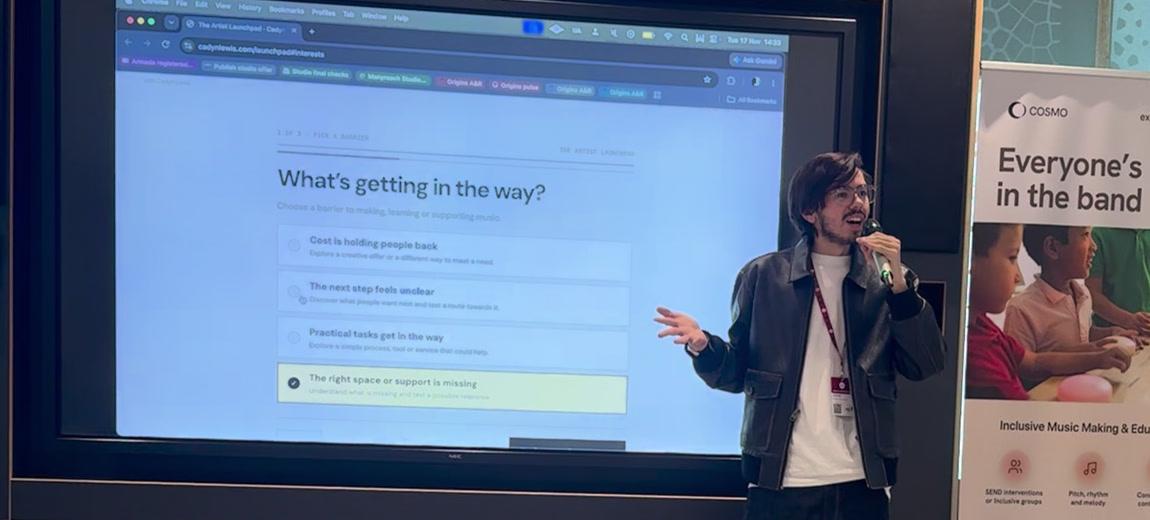
Cadyn used the studio experience again when he demonstrated the Artist Launchpad. Delegates were invited to scan a QR code and consider a barrier affecting themselves, a young person or the people they support. His first step towards the studio had been a conversation with someone who knew the area. The exercise asked people to consider who they could approach, what support already existed and one small action they could try before committing to something larger.
During the Q&A, a delegate asked whether building the businesses had helped his own music. Cadyn pointed to the different voices and sounds that working with other artists had brought into his production.
I feel way more inspired because I’m able to surround myself with incredible creatives.
Conversations with the artists also helped him decide where Origins needed to offer more support.
He closed with Musicians Rights UK, sharing its free guides to rights, royalties and music paperwork. The Artist Launchpad remains available to revisit after the session.
Thank you to Music Mark for inviting us to share this work, and to everyone who came along and contributed to the discussion.
View the session in Music Mark’s conference programme.
Published